
 Call Us:


Categories
- Anti-coagulants
- AntiGas
- Baby & Child
- Beauty & Skincare
- Brain Health
- Drinks
- Ethical
- Fragrances & Girts
- Fungal Nail Infections
- Gastro-Intestinal care
- Gatro-Intestinal Health
- Gillette
- Hormonal
- Medicines & Treatment
- Medicines & Treatments
- Prescription Medicine
- Sexual Health
- Special Offer
- Stomach Ulcer
- Toiletries
- Uncategorized
- Vitamins | Supplements | Nutrition
Archives
- June 2026
- June 2024
- May 2024
- July 2023
- May 2022
- March 2022
- February 2022
- November 2021
- March 2021
- May 2020
- April 2020
- March 2020
- February 2020
- January 2020
- December 2019
- November 2019
- October 2019
- September 2019
- August 2019
- July 2019
- June 2019
- May 2019
- April 2019
- March 2019
- February 2019
- January 2019
- December 2018
- November 2018
- October 2018
- September 2018
- August 2018
- July 2018
- June 2018
- May 2018
- April 2018
- March 2018
- February 2018
- January 2018
- December 2017
- November 2017
- October 2017
- September 2017
- July 2017
- March 2017
Air pollution: black, Hispanic and poor students most at risk from toxins study
Air pollution: black, Hispanic and poor students most at risk from toxins study
Children are facing risks that will affect their ability to learn, says expert following study covering 90,000 schools across the US

Air pollution: black, Hispanic and poor students most at risk from toxins study
- Children are facing risks that will affect their ability to learn
- Study covered 90,000 schools across the US

Schoolchildren across the US are plagued by air pollution thats linked to multiple brain-related problems, with black, Hispanic and low-income students most likely to be exposed to a fug of harmful toxins at school, scientists and educators have warned.
The warnings come after widespread exposure to toxins was found in new research using EPA and census data to map out the air pollution exposure for nearly 90,000 public schools across the US.
This could well be impacting an entire generation of our society, said Dr Sara Grineski, an academic who has authored the first national study, published in the journal Environmental Research, on air pollution and schools.
Grineski and her University of Utah colleague Timothy Collins grouped schools according to their level of exposure to more than a dozen neurotoxins, including lead, mercury and cyanide compounds.
The research found that:
- Only 728 schools achieved the safest possible score.
- Five of the 10 worst polluted school counties have non-white populations of over 20%
- The five worst polluted areas include New York, Chicago and Pittsburgh, as well as Jersey City and Camden in New Jersey. One teacher in Camden told the Guardian that heavy industry was destroying our children.
Cash-strapped authorities have routinely placed schools on the cheapest available land, which is often beside busy roads, factories or on previously contaminated sites. Teacher unions worry that the Trump administrations enthusiasm for charter schools, championed by education secretary Betsy DeVos, will diminish federal intervention to reverse this.
The study found that pre-kindergarten children are attending higher risk schools than older students a stark finding given the vulnerability of developing brains.
Pollution exposure is also drawn along racial lines. While black children make up 16% of all US public school students, more than a quarter of them attend the schools worst affected by air pollution. By contrast, white children comprise 52% of the public school system but only 28% of those attend the highest risk schools. This disparity remains even when the urban-rural divide is accounted for.
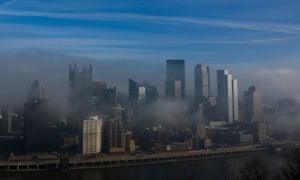
Schools with large numbers of students of colour are routinely located near major roads and other sources of pollution, with many also grappling with other hazards such as lead-laced drinking water and toxins buried beneath school buildings
Grineski said there were a range of consequences. Were only now realizing how toxins dont just affect the lungs but influence things like emotional development, autism, ADHD and mental health, she said. Socially marginalized populations are getting the worst exposure. When you look at the pattern, its so pervasive that you have to call it an injustice and racism.
The research is important and is consistent with other localized information weve seen over the years, according to Stephen Lester, science director of the Center for Health, Environment and Justice, who wasnt involved in the study.
Children are facing risks that will affect their ability to learn, he said. Its a serious problem that needs a serious government response.
As scientists have pieced together evidence showing the link between air toxins and neurological harm, American cities are still largely wedded to a legacy that has juxtaposed certain neighborhoods with heavy traffic and hulking industry.
Only a handful of states require that schools are not placed next to environmental hazards. In 2010, the EPA issued national guidelines on picking school locations but backed away from imposing mandatory buffer zones.
The guidelines were deemed voluntary after a whole lot of pushback from various financial and political interests, according to Lester, who was part of a group advising the EPA.
High risk: New Jersey and New York
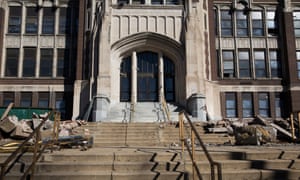
Grineskis study suggests the problem is particularly acute in New York and New Jersey, where a third of schools across the two states are in the highest risk category for air pollutants.
Camden, which hugs a curve of the Delaware River in New Jersey, was once home to one of the worlds largest shipyards and a vast Campbells Soup factory. Camdens industrial base has diminished, but persistent air pollution continues to gnaw away at a city that has been blighted by poverty and struggling schools.
Of the 140 worst schools identified for air pollution in Grineskis study, 11 are in a wedge of south Camden, near the industrialized waterfront. Neighbors include a cement plant, a metal scrapyard and a sewage treatment plant. It is estimated around 330,000 trucks pass through south Camden each year.
Camden is heavily African American, Hispanic and young around a third of the 75,000 population is under 18. A further third of the population lives in poverty. The schools, around half built before the Great Depression, endure creaking buildings, lagging test scores and absenteeism.
The city and state are bringing industry to Camden and it is destroying our children, said Doris Carpenter, a music teacher who helped start a charter school just 300 yards from the I-676 highway.
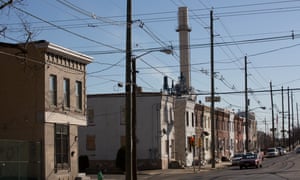
Carpenter recalls visiting the nurses room at DUE Charter School and seeing lines of children in respirator masks. She said the majority of the 600 students, some as young as six years old, had asthma. DUE was closed, ostensibly because of poor test results, in 2014 as part of a dizzying reorganization that has introduced 11 new and rebadged Renaissance schools.
Lots of days were lost because of asthma, Carpenter said. We also had a lot of ADHD and learning disabilities which I think was exacerbated by the air. The children werent able to concentrate like other kids can.
Its all over the city. In summer, you walk outside and it can smell like a cesspool. How can you learn in that environment?

Scientific endeavour is uncovering a jumble of neurological reactions to air pollution, from early onset Alzheimers to schizophrenia. Much of this work is in its infancy, but scientists say there is well established evidence that children are far more susceptible to pollutants than adults, with potentially severe consequences for their development.
Camden has the second highest asthma rate in the state and is heavily affected by certain cancers, such as of the lungs and kidneys. Teachers in Camden are also starting to ponder whether student performance could, at least in part, be pinned on the local environment.
Five schools in Camden are located on plots of land considered actively contaminated by the New Jersey department of environmental protection.
A sixth, the Early Childhood Education Center, was built on a former chemical dumping site that had dangerously high levels of arsenic in the soil. In 2006, the school was demolished and then rebuilt, after a layer of soil was excised, in the same spot.
Camdens school district also spends around $75,000 a year on bottled water because the drinking supply has been tainted with lead. Fountains in schools have been shut off and only hand washing is permitted at sinks, although cooking with the tap water is allowed. The problem is, incredibly, entering its 16th year, with no long-term remedy in sight.
Across the school district, only 12% of high schoolers in Camden meet expectations in English language tests, with even fewer making the grade in mathematics. At Camden High School, a gothic landmark known as the castle on the hill that is being demolished and will be replaced by a public school, 43% of 12th graders were chronically absent in 2016-17. Just 6% of their counterparts at Cherry Hill High, in a wealthier, whiter area just 10 miles to the east, were frequently missing from lessons.
Before, we might have labelled a kid with bad behaviour as just being a bad kid, said Keith Benson, who taught history in the Camden school system before becoming the head of the local teachers union.
Now we are thinking about it another way. Theres no telling how much potential has been lost because of environmental issues, how many hopes were stunted because these kids were not close to clear air and water.
Camdens school district admitted that it had been beleaguered with steep challenges decades in the making, including a grade-fixing scandal, prior to a state intervention in 2013. Since then, the district said, the graduation rate has jumped, school suspensions have dropped and millions of dollars have been spent on improving aging buildings, some of which in the county have been affected by mold.
But theres only so much the district can do about air pollution beyond the school gates. As an urban district, we recognize the realities of our environment and do what is within our capacity to ensure the health and wellbeing of our students and our community, said a district spokeswoman.

According to the New Jersey DEP, Camdens air quality now meets national standards in four out of five key pollutants, with only ozone, which can create smog, exceeding the EPA threshold. Fumes that waft across the river from Philadelphia are a major culprit, the DEP said.
Overall, the states biggest challenge is with ozone, due in large part to all of the traffic in the region, but also a result of less stringent emissions controls on power plants and industrial sources in Pennsylvania and other upwind states, said a DEP spokesman.
For many Camden residents, hardened by negative portrayals of their city, air pollution is simply another challenge. The mold, the air quality, all of that is a concern to me, said Rosa Trent, a longterm Camden resident who has three school age children two have asthma and one has slight autism. The pollution here will always stay with them. I grew up here and its a fraction of who I am as a person. Its because we are people of color. I own my own business, I have a bachelors. But to people Im Hispanic and Im from Camden. Thats the bracket Im in and its hard to break out from that.
- This article was amended on 1 February 2017 to clarify that the site of Camden High School will become a public school, the schools closed due to mold were located in the county of Camden, not the city, and that Renaissance schools are not run by corporations.


