


Special Offer

Accu-Chek Instant Blood Glucose Test Strips, 50 Test Strips

18,900.00 25,000.00
Original price was: ₦25,000.00.Current price is: ₦18,900.00. or subscribe and save 10%

Accu-Chek Instant Blood Glucose Monitoring System

30,500.00 34,990.00
Original price was: ₦34,990.00.Current price is: ₦30,500.00.

Recent Posts


Sale!
-13%

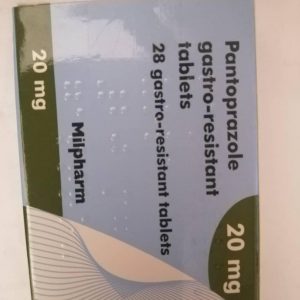
PANTOPRAZOLE 40MG 28 GASTRO-RESISTANT TABLETS

This medicine is intended for short-term treatment of duodenal and stomach ulcers and reflux oesophagitis. To eradicate bacteria called Helicobacter pylori (present in the digestive system) in combination with antibiotics.

Original price was: ₦6,550.00.Current price is: ₦4,550.00.

Out of stock

EAN: N/A
Tags: No Tags

Description

Pantoprazole is a selective “proton pump inhibitor”, a medicine which reduces the amount of acid

produced in your stomach. It is used for treating acid-related diseases of the stomach and intestine.

Pantoprazole is used for treating:

Adults and adolescents 12 years of age and above:

Reflux oesophagitis. An inflammation of your oesophagus (the tube which connects your

throat to your stomach) accompanied by the regurgitation of stomach acid.

Adults:

An infection with a bacterium called Helicobacter pylori in patients with duodenal ulcers and

stomach ulcers in combination with two antibiotics (Eradication therapy). The aim is to get rid

of the bacteria and so reduce the likelihood of these ulcers returning.

Stomach and duodenal ulcers.

Zollinger-Ellison-Syndrome and other conditions producing too much acid in the stomach.

2.

What you need to know before you take Pantoprazole

Do not take Pantoprazole

if you are allergic to pantoprazole or any of the other ingredients of this medicine (listed in

section 6).

if you are allergic to medicines containing other proton pump inhibitors.

Warnings and precautions

Talk to your doctor or pharmacist before using Pantoprazole

if you have severe liver problems. Please tell your doctor if you ever had problems with your

liver in the past. He will check your liver enzymes more frequently, especially when you are

taking pantoprazole as a long-term treatment. In the case of a rise of liver enzymes the treatment

should be stopped.

if you have reduced body stores or risk factors for reduced vitamin B12 and receive pantoprazole

long-term treatment. As with all acid reducing agents, pantoprazole may lead to a reduced

absorption of vitamin B12.

if you are taking HIV protease inhibitors such as atazanavir (for the treatment of HIV-infection)

at the same time as pantoprazole, ask your doctor for specific advice.

if you have ever had a skin reaction after treatment with a medicine similar to pantoprazole that

reduces stomach acid.

if you are due to have a specific blood test (Chromogranin A).

If you get a rash on your skin, especially in areas exposed to the sun tell your doctor as soon as you

can, as you may need to stop your treatment with pantoprazole. Remember to also mention any other

ill-effects like pain in your joints.

Tell your doctor immediately if you notice any of the following symptoms:

an unintentional loss of weight

repeated vomiting

difficulty in swallowing

vomiting blood

you look pale and feel weak (anaemia)

you notice blood in your stools

severe and/or persistent diarrhoea, as pantoprazole has been associated with a small increase in

infectious diarrhoea

Your doctor may decide that you need some tests to rule out malignant disease because pantoprazole

also alleviates the symptoms of cancer and could cause delay in diagnosing it. If your symptoms

continue in spite of your treatment, further investigations will be considered.

If you take pantoprazole on a long-term basis (longer than 1 year) your doctor will probably keep you

under regular surveillance. You should report any new and exceptional symptoms and circumstances

whenever you see your doctor.

Taking a proton pump inhibitor like pantoprazole, especially over a period of more than one year, may

slightly increase your risk of fracture in the hip, wrist or spine. Tell your doctor if you have

osteoporosis or if you are taking corticosteroids (which can increase the risk of osteoporosis).

Other medicines and Pantoprazole

Tell your doctor or pharmacist if you are taking, have recently taken or might take any other medicines

as Pantoprazole may influence the effectiveness of these medicines.
Additional information

Description

Pantoprazole is a selective “proton pump inhibitor”, a medicine which reduces the amount of acid

produced in your stomach. It is used for treating acid-related diseases of the stomach and intestine.

Pantoprazole is used for treating:

Adults and adolescents 12 years of age and above:

Reflux oesophagitis. An inflammation of your oesophagus (the tube which connects your

throat to your stomach) accompanied by the regurgitation of stomach acid.

Adults:

An infection with a bacterium called Helicobacter pylori in patients with duodenal ulcers and

stomach ulcers in combination with two antibiotics (Eradication therapy). The aim is to get rid

of the bacteria and so reduce the likelihood of these ulcers returning.

Stomach and duodenal ulcers.

Zollinger-Ellison-Syndrome and other conditions producing too much acid in the stomach.

2.

What you need to know before you take Pantoprazole

Do not take Pantoprazole

if you are allergic to pantoprazole or any of the other ingredients of this medicine (listed in

section 6).

if you are allergic to medicines containing other proton pump inhibitors.

Warnings and precautions

Talk to your doctor or pharmacist before using Pantoprazole

if you have severe liver problems. Please tell your doctor if you ever had problems with your

liver in the past. He will check your liver enzymes more frequently, especially when you are

taking pantoprazole as a long-term treatment. In the case of a rise of liver enzymes the treatment

should be stopped.

if you have reduced body stores or risk factors for reduced vitamin B12 and receive pantoprazole

long-term treatment. As with all acid reducing agents, pantoprazole may lead to a reduced

absorption of vitamin B12.

if you are taking HIV protease inhibitors such as atazanavir (for the treatment of HIV-infection)

at the same time as pantoprazole, ask your doctor for specific advice.

if you have ever had a skin reaction after treatment with a medicine similar to pantoprazole that

reduces stomach acid.

if you are due to have a specific blood test (Chromogranin A).

If you get a rash on your skin, especially in areas exposed to the sun tell your doctor as soon as you

can, as you may need to stop your treatment with pantoprazole. Remember to also mention any other

ill-effects like pain in your joints.

Tell your doctor immediately if you notice any of the following symptoms:

an unintentional loss of weight

repeated vomiting

difficulty in swallowing

vomiting blood

you look pale and feel weak (anaemia)

you notice blood in your stools

severe and/or persistent diarrhoea, as pantoprazole has been associated with a small increase in

infectious diarrhoea

Your doctor may decide that you need some tests to rule out malignant disease because pantoprazole

also alleviates the symptoms of cancer and could cause delay in diagnosing it. If your symptoms

continue in spite of your treatment, further investigations will be considered.

If you take pantoprazole on a long-term basis (longer than 1 year) your doctor will probably keep you

under regular surveillance. You should report any new and exceptional symptoms and circumstances

whenever you see your doctor.

Taking a proton pump inhibitor like pantoprazole, especially over a period of more than one year, may

slightly increase your risk of fracture in the hip, wrist or spine. Tell your doctor if you have

osteoporosis or if you are taking corticosteroids (which can increase the risk of osteoporosis).

Other medicines and Pantoprazole

Tell your doctor or pharmacist if you are taking, have recently taken or might take any other medicines

as Pantoprazole may influence the effectiveness of these medicines.

Additional information